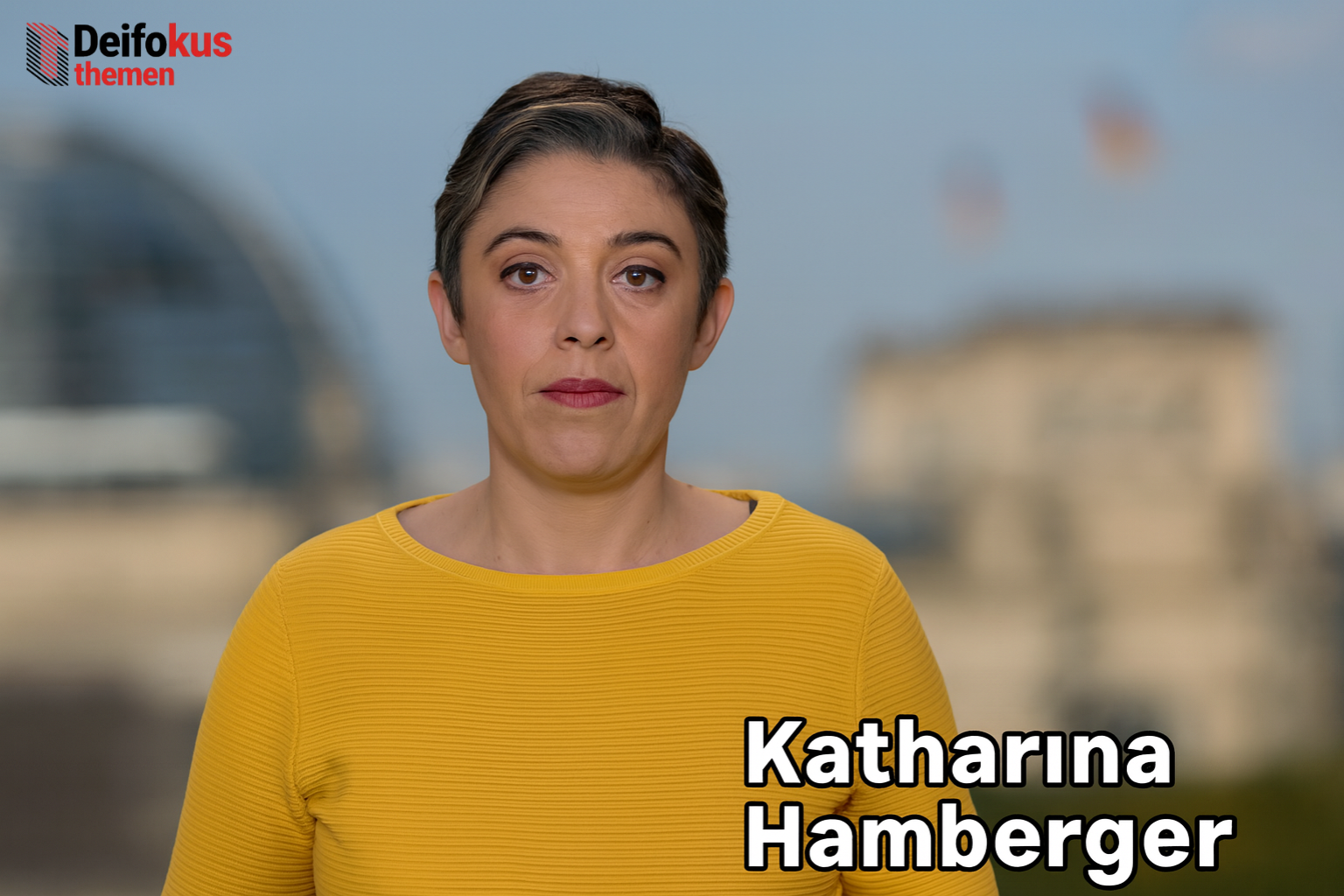
Katharina Hamberger: Renowned Voice in German Political Journalism
Katharina Hamberger stands as a prominent and respected figure in the landscape of German political journalism. As a seasoned capital correspondent for Deutschlandradio, encompassing Deutschlandfunk, Deutschlandfunk Kultur, and Deutschlandfunk Nova, she brings a blend of clarity, depth, and astute analysis to the nation's most pressing political discussions. While public interest often extends to the personal details of such influential figures, including her age, Katharina Hamberger's story is best told through the remarkable trajectory of her career, which paints a vivid picture of professional development and enduring commitment to high-quality broadcast journalism. Her journey, marked by early ambition and continuous intellectual curiosity, provides a compelling narrative of dedication to reporting on the intricate workings of German politics.
The Formative Years: Cultivating a Passion for Media and Politics
Katharina Hamberger's journalistic path began in Altötting, a charming town in Upper Bavaria, Germany. This regional grounding likely instilled an early appreciation for diverse perspectives, a crucial trait for any political reporter. Her academic journey commenced at the University of Regensburg between 2005 and 2008, where she pursued a Bachelor of Arts in Media Studies. Her thesis, titled "Cartesianischer Dualismus und Medien des Barock" (Cartesian Dualism and Baroque Media), hints at a deep intellectual engagement with the historical and philosophical underpinnings of communication.
Even before her university studies, Hamberger was already gaining invaluable practical experience. During her school years, she served as a reporter and moderator for Bayerischer Rundfunk's regional studio in Niederbayern/Oberpfalz and Bayern3. This early immersion in broadcast media was exceptional, especially for a student reporter in 2005, a time when many aspiring journalists primarily gravitated towards print. This initial foray into radio proved transformative, captivating her attention and solidifying her interest in electronic media within a remarkably short period. This early hands-on experience not only honed her reporting skills but also ignited a lifelong passion for radio, setting the stage for her future professional endeavors. For a detailed look at her early career, explore
Katharina Hamberger: From Student Reporter to Berlin Correspondent.
Academic Deep Dive and Professional Broadening in Hamburg
Following her undergraduate studies, Katharina Hamberger further specialized her expertise by pursuing a Master's degree in Journalism in Hamburg, a vibrant media hub in northern Germany. She completed this advanced degree in 2010, marking another significant milestone in her academic and professional development. Her Master's thesis, "Ist Social Networking ein Instrument zur Zuhörerbindung? In einer Forschungsstudie haben Facebook und N-JOY zusammengearbeitet" (Is Social Networking a Tool for Listener Engagement? A Research Study Collaboration between Facebook and N-JOY), was particularly forward-thinking for its time. Completed in 2010, this research demonstrated a keen understanding of the nascent power of social media for audience interaction, a concept that has since become central to modern journalism. Her foresight in exploring digital engagement highlights her adaptability and willingness to embrace evolving media landscapes.
During her time in Hamburg, Hamberger strategically broadened her professional horizons through a series of diverse and impactful roles. She worked as a freelance journalist for publications such as Steuer Nord, Der Freitag, and the Passauer Neue Presse, gaining experience across different editorial styles and subject matters. Concurrently, she undertook prestigious internships at stern.de, the politics department of the Hamburger Abendblatt, and the editorial team of the renowned political talk show "Anne Will." These internships provided exposure to high-level political reporting and journalistic production, significantly enriching her skill set and network. This period in Hamburg was crucial in solidifying her appreciation for a career in electronic media and her commitment to insightful reporting.
Katharina Hamberger's Enduring Influence at Deutschlandradio
Since 2012, Katharina Hamberger has been a cornerstone of Deutschlandradio's political coverage from its capital studio in Berlin. Her tenure as a reporter for Deutschlandfunk, Deutschlandfunk Kultur, and Deutschlandfunk Nova has been extensive, demonstrating consistent expertise and dedication. Prior to her full-time role as a correspondent, she also gained experience as an intern and trainee within Deutschlandradio, establishing a deep understanding of its operations and journalistic standards. From August 2012 to the present, she has been an integral part of their reporting team, focusing on the most critical issues facing Germany.
In her capacity as a capital correspondent, Katharina Hamberger covers a broad and impactful portfolio. Her primary areas of focus include the political parties of the Union (specifically the CSU), domestic policy, migration and integration, and agriculture and nutrition. These beats are central to Germany's political discourse and often involve complex, sensitive, and rapidly evolving topics. Her reporting provides listeners with crucial insights into parliamentary debates, policy developments, and the societal implications of political decisions. Earlier in her time as a freelance reporter for Deutschlandradio in Berlin (until 2013), she also covered transport policy and was involved in reporting on the investigative committees related to the CSU and the NSU scandal, showcasing her versatility and willingness to tackle challenging subjects. For a deeper dive into her professional journey, consider reading
Katharina Hamberger's Extensive Career in German Broadcast Media.
Decoding the Professional Journey: Insights into Katharina Hamberger's "Alter"
The search query "Katharina Hamberger Alter" naturally reflects a public interest in understanding the background and experience of a prominent media figure. While Katharina Hamberger's specific birthdate is not publicly disclosed, her detailed career timeline provides a clear indication of her professional maturity and, by inference, her approximate age range.
Let's piece together her professional chronology:
* She began her Bachelor's degree at the University of Regensburg in
2005. Assuming a typical age of 18-20 for starting university in Germany, she would have been born around 1985-1987.
* She completed her Bachelor's in
2008 and her Master's in
2010.
* By
2012, she was already working as a reporter for Deutschlandradio in Berlin, following prior internships and traineeships. This means she entered the professional media landscape with significant experience shortly after completing her master's.
Based on these dates, if Katharina Hamberger started her university studies around age 19 in 2005, she would be approximately 19 + (2024 - 2005) = 19 + 19 = 38 years old in 2024. Therefore, it is reasonable to estimate that Katharina Hamberger is likely in her
late 30s to early 40s. This estimation underscores that despite not having an explicitly stated "Alter," her robust and continuous professional activity since the mid-2000s signifies a journalist with substantial experience, a well-developed skill set, and a deep understanding of her beats. Her relatively young age for such a senior and influential role highlights her rapid ascent and the high regard in which her work is held.
Beyond the Headlines: The Impact of a Seasoned Journalist
Katharina Hamberger's position as a capital correspondent for Deutschlandradio is not merely a title; it signifies her role as a critical interpreter of German politics for a national audience. Her ability to distil complex legislative processes, intricate policy debates, and nuanced political party dynamics into accessible and insightful reports is a testament to her journalistic prowess.
What makes her a truly renowned voice?
*
Clarity and Precision: In an era of information overload, Hamberger's reporting is consistently clear, concise, and focused, allowing listeners to grasp essential information without unnecessary jargon.
*
Depth of Analysis: Beyond surface-level reporting, she delves into the implications and potential consequences of political decisions, offering listeners a richer understanding. Her extensive background in both media studies and journalism equips her with a strong analytical framework.
*
Specialized Expertise: Her focus on key areas like domestic policy, migration, and the CSU means she possesses a profound understanding of these often-contentious subjects, enabling her to ask incisive questions and provide authoritative commentary.
*
Engagement with Evolving Media: As evidenced by her Master's thesis, Hamberger has always shown an aptitude for understanding how media and audience interaction evolve, ensuring her reporting remains relevant and impactful in a dynamic landscape.
Her consistent presence and reliable reporting contribute significantly to the informed public discourse in Germany. In a media environment often characterized by sensationalism, Hamberger's work stands out for its commitment to factual accuracy, balanced perspectives, and thoughtful analysis, embodying the highest standards of public broadcast journalism.
Conclusion
Katharina Hamberger's journey from an early enthusiast for radio in Altötting to a respected capital correspondent in Berlin is a testament to her dedication, intellectual rigor, and unwavering commitment to journalistic excellence. While the exact "Katharina Hamberger Alter" remains a private detail, her extensive professional timeline, beginning with her university studies in 2005 and continuing through her influential role at Deutschlandradio, clearly indicates a career rich with experience and significant contributions. Her insightful reporting on crucial political issues ensures she remains a vital and authoritative voice, shaping public understanding of Germany's political landscape for years to come.